What I learned writing my nan's eulogy
- Stuart Pearson
- Jun 9
- 4 min read

I’d never been asked to write a eulogy until my nan died.
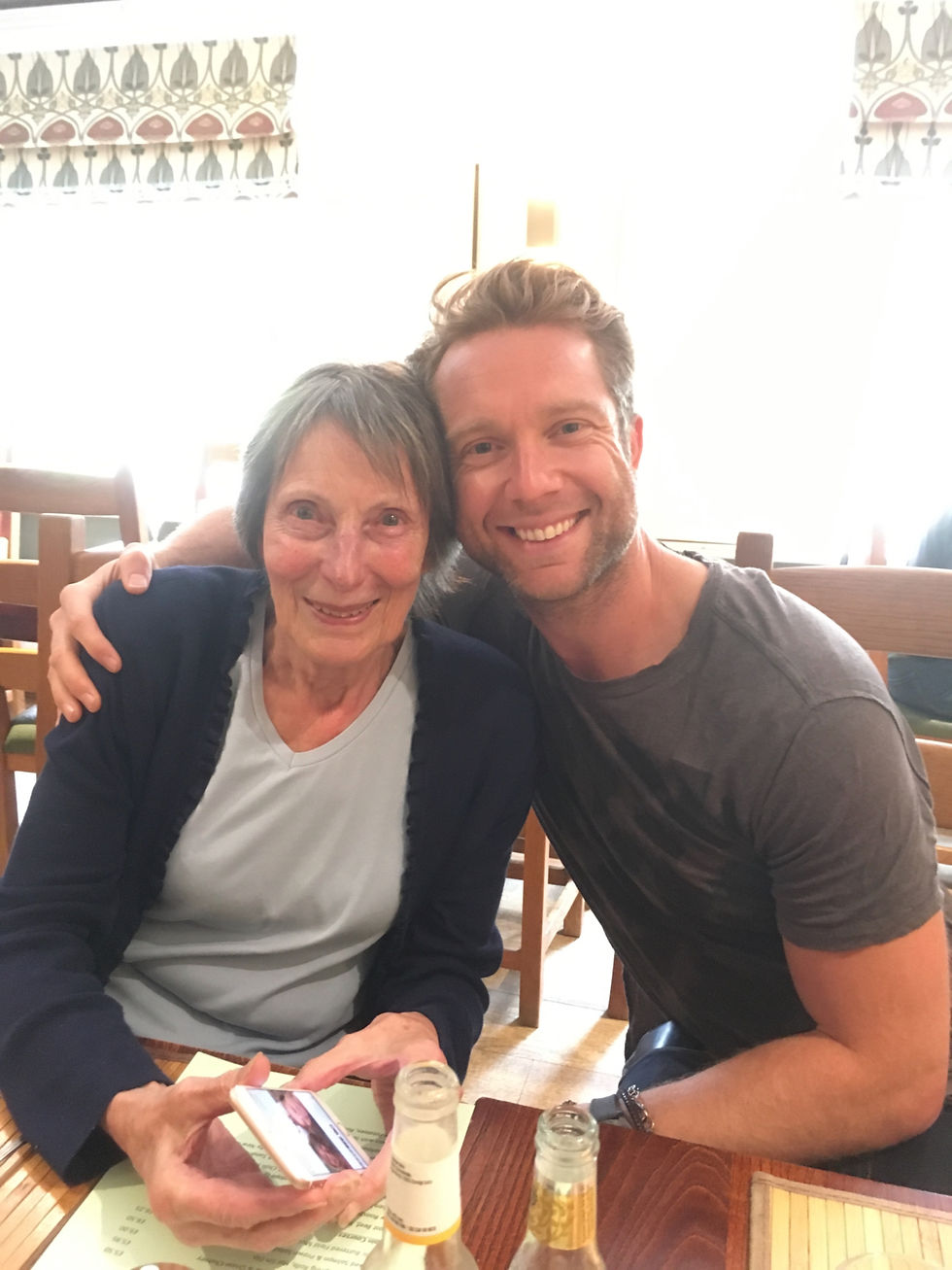
When my aunty asked me to write it, I was flattered. My nan and I were very close, so it felt like a real honour.
However, when I sat down to write it, it also felt like a huge responsibility.
How could I summarise my nan’s life in a speech that would last no more than five minutes? Would I do her justice? And whilst I had my own vivid memories of her, what about everyone else's?
Here’s what I learned.
1. It’s hard
It’s no wonder people seek help with writing a eulogy. It’s difficult.
You know the person and you have the memories. Yet, the responsibility of representing an entire life is huge. My nan was 91 when she died.
Not only that, but you’re having to write it when the person you’ve loved has recently passed.
It’s still raw and the recollections – your own and those who’ve supplied their own – quite easily stir emotions.
2. There’s writing, and then there’s writing a eulogy
We all have to write. Even if you don’t do it for a living, writing is an important part of everyday life.
But writing a eulogy – that’s another thing entirely.
Every story has to earn its place. Every memory needs to help paint a picture of the person you're remembering. The tone has to feel right. And that’s before you consider whether or not you’ve missed an important story.
Crafting a eulogy requires work, multiple edits and numerous iterations. When giving a eulogy, it’s a time when everyone wants to hear what you have to say – so there’s a natural desire to get it right.
3. The details count
It’s important that the small things feature in your eulogy.
The way the person laughed, the routines they had and the things they said. My nan was very funny, so making sure this came across was important to me.
Those small details are often what people remember most.
The person’s mannerisms are just as important as their successes, so it’s important to ensure that they play a part in the eulogy.
4. It's okay to make people laugh
Yes, you’re likely to be delivering a eulogy at a funeral. However, warmth, personality and humour will be welcomed by those in the audience, all of whom are grieving the loss of someone very important to them.
The only caveat is that it must be authentic.
Of course, a funeral isn’t the time to be cracking jokes, but it does provide the opportunity to relay funny stories about the one you’ve lost – especially if other people in the audience have never heard them before.
5. You're writing for the room
It may begin its life on paper, but a eulogy is a spoken tribute.
When I’m writing as a communications professional for clients, searching for the perfect word is important. It’s the polish that the clients are looking for.
However, a eulogy is being read to a room full of people. So, it needs to sound natural.
When I was writing my nan’s eulogy, I would read sentences and sections aloud. Even if it looked good on paper, if it didn’t sound right or felt awkward when saying it, I changed it.
After all, if I was stumbling over words whilst reading it on my own, I was almost guaranteed to stumble over them with the weight of the event and an audience in front of me.
People don't remember perfectly crafted sentences.
They remember stories.
6. The perfect eulogy doesn't exist
Remember, you’re not trying to produce a masterpiece.
Although, if I’m honest, when writing my nan’s eulogy, it didn’t feel that way.
I wanted to capture her personality, her life and the impact that she had on those around her. The responsibility felt enormous.
However, in reality, no speech can contain an entire life. A life cannot be compressed into a few pages of A4 – and that’s okay.
It's a tribute. A chance to reflect on what mattered most and share those memories with the people gathered there.
The best eulogies aren’t flawless, but they are heartfelt, authentic and true to the person being remembered.
Conclusion
When writing my nan's eulogy, I learned that the words rarely arrive all at once.
They emerge gradually through memories, conversations and reflection.
I also realised that many people face exactly the same challenge at a time when clarity of thought can be difficult to find.
Grief has a way of making even simple tasks feel overwhelming, yet the responsibility of standing up and speaking about someone you love can feel enormous.
That's one of the reasons I created The Eulogy Writer.
The service isn't simply about writing. It's about helping people organise their thoughts, gather their memories and find the words that can feel so difficult to access during an emotional and challenging time.
Because in the end, a eulogy isn't really about the person delivering it.
It's about helping everyone in the room remember the person who is no longer there.
And that's what a eulogy is really for.



Comments